

New publication!
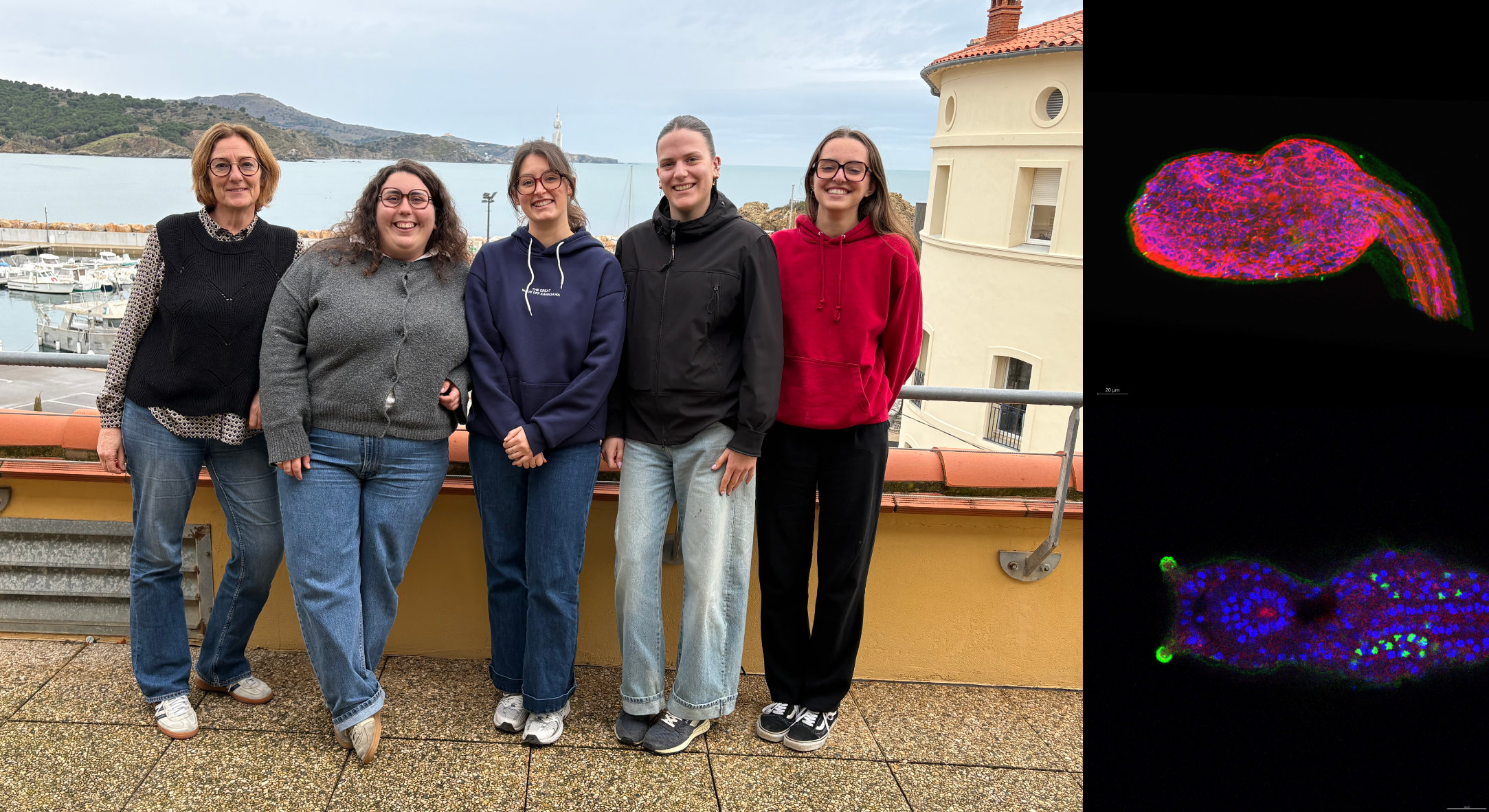
Fluorescent in situ hybridization for the Islet gene (red) and nuclear DAPI staining (blue) in an embryo of the ascidian Ciona intestinalis at a mid tailbud stage. Islet was detected in three spots at the anterior end of the embryo that prefigure the future sensory papillae.

Last publication from the DEEVA team!

The study details how the canonical Wnt signaling patterns the anterior neurectoderm during the development of the ascidian Ciona intestinalis. Although the global biological function is conserved with other animals, the underlying molecular and regulatory logics have significantly changed.

Roure A, Chowdhury R and Darras S (2025). Six3/6 acts downstream of canonical Wnt signaling to regulate the formation of anterior neural border-derived structures in ascidian embryos. Development 152 (23): dev204927. https://doi.org/10.1242/dev.204927

In this issue of Development, you can also read a Research Highlight: A palp-able conservation of Wnt signalling in neuroectoderm patterning and an Interview: The people behind the papers – Agnès Roure and Sébastien Darras
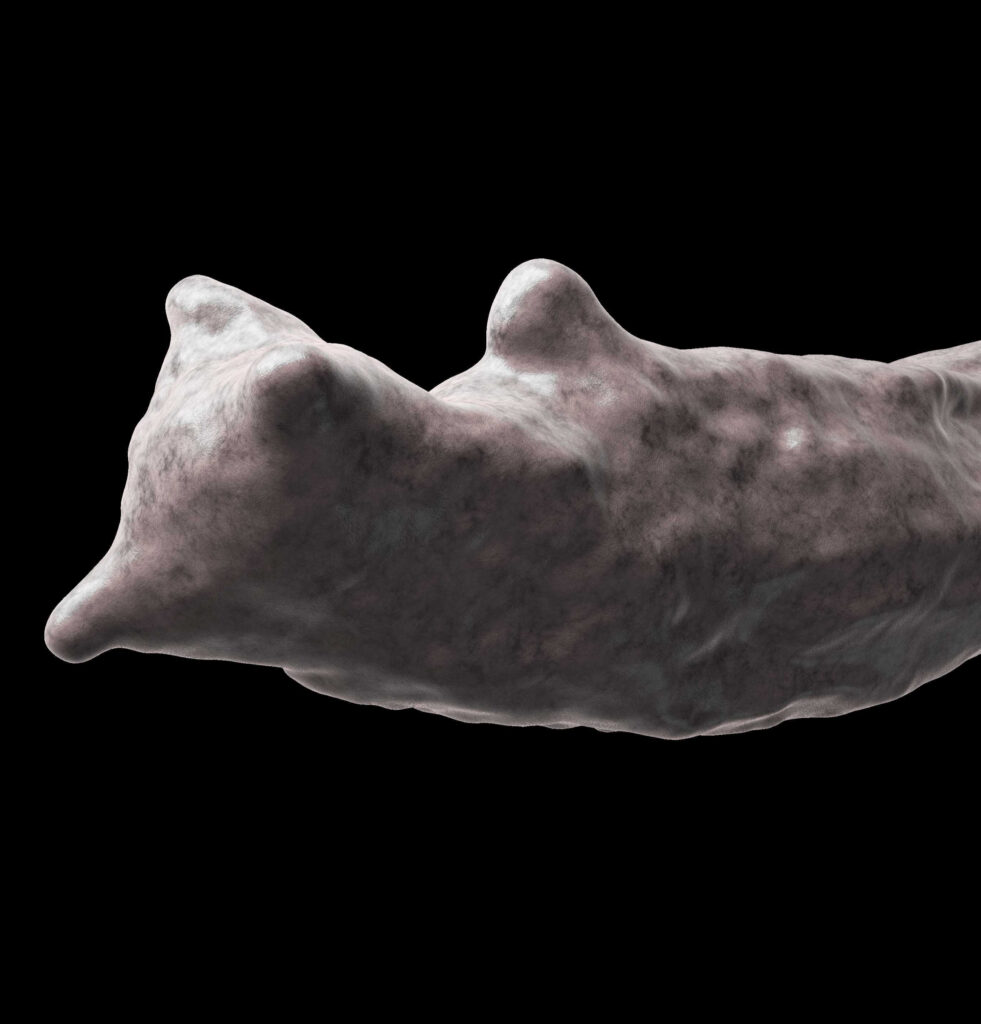
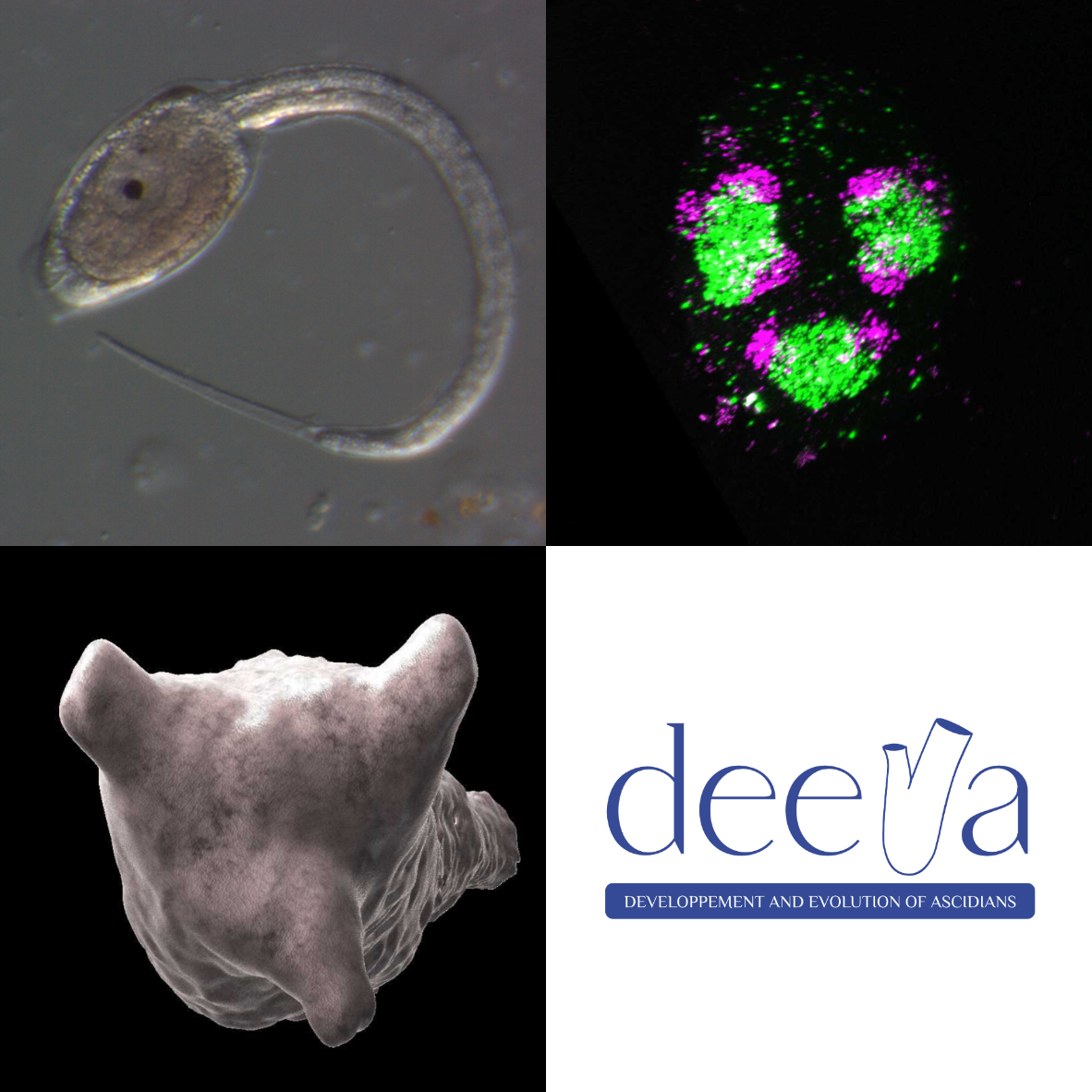
3D rendering of the trunk of a Ciona intestinalis larva stained using phalloidin. This is the CyRhino phenotype caused by inactivation of the gene Six3/6 using CRISPR/Cas9: in addition to the three anterior papillae, a fourth ectopic papilla forms posteriorly reminding the horn of a rhinoceros.
événements et actualités récents Restez à jour :